
The Execution Gap: Why Strategy Isn’t Enough to Grow Your Business
The Execution Gap: Why Strategy Isn’t Enough to Grow Your Business
You know your strategy inside out. Yet progress feels slow, and the business still depends on you to move forward. That gap between planning and delivery is the execution gap. In this post, you’ll see why strategy alone won’t grow your business—and how a sharp execution audit, clear rhythms, and tighter systems can close that gap for good. Read more about the strategy execution gap here.
Understanding the Execution Gap
You've got a brilliant strategy, but why isn't it moving the needle? The answer lies in the execution gap—the space between having a plan and seeing results. Let's explore why strategy alone isn't enough.
Why Strategy Alone Fails
A dazzling strategy is only a piece of the puzzle. Many businesses falter because they rely solely on plans. Strategy sets the direction, but it doesn't move the wheels. Without action, strategy is just words.
Consider a car with no fuel. The design might be flawless, but it won't go anywhere. Many founders are stuck, thinking their strategy will automatically yield outcomes. It doesn’t. Execution turns strategy into action. You need systems that drive this action.
Most assume that a solid plan guarantees success. Yet, without consistent movement, the plan remains static. Operational discipline—the routines, checks, and adjustments—is what drives progress. You need both the map and the fuel.
Diagnosing Stalled Progress
If the strategy is strong, why the stall? It's time to diagnose. First, identify if you are the bottleneck. Founder dependency can halt momentum. When decisions and actions circle back to you, speed decreases.
Next, look at your team. Are they clear on their roles? Ambiguity in responsibilities leads to hesitation. Clear roles mean faster decisions and smoother execution.
Finally, check your processes. Are they cumbersome? Complex systems slow down progress. Simplifying workflows can significantly enhance your business execution system. The longer you wait, the more entrenched these issues become.
Closing the Gap

To close the execution gap, focus on behaviours and systems. This transition from plan to action involves deliberate changes in how you operate.
Behaviours that Drive Execution
The first step is shifting behaviours. Execution requires a mindset of action. Encourage initiatives that push forward. This isn’t about grand gestures but consistent micro-actions that accumulate over time.
Start with clear communication. Everyone should know the plan and their part in it. A team that understands its role executes faster. Regular check-ins can ensure alignment. Misunderstandings are costly.
Next, foster accountability. Create a culture where team members own their actions. Accountability isn’t about blame; it’s about owning results. When everyone is accountable, execution becomes a shared goal.
Challenge assumptions. Most people think staying busy means productivity, but it's the focused actions that count. Break free from the usual patterns and find better ways to operate.
Systems for Sustained Movement
Systems are the backbone of sustained execution. They create a leadership operating system that supports continuous progress. Start with simple, repeatable processes that reduce guesswork.
Identify core activities that need consistent attention. Create routines around these. Systems don’t have to be complex; they just need to work. A reliable rhythm beats sporadic bursts of activity.
Integrate feedback loops. Regularly review what works and what doesn’t. This loop helps in refining your approach. Without it, you risk repeating ineffective actions.
Finally, ensure the systems are flexible. The best systems adapt as your business grows. They should evolve to support scaling SMEs in the UK, not hinder them.
Conducting an Execution Audit
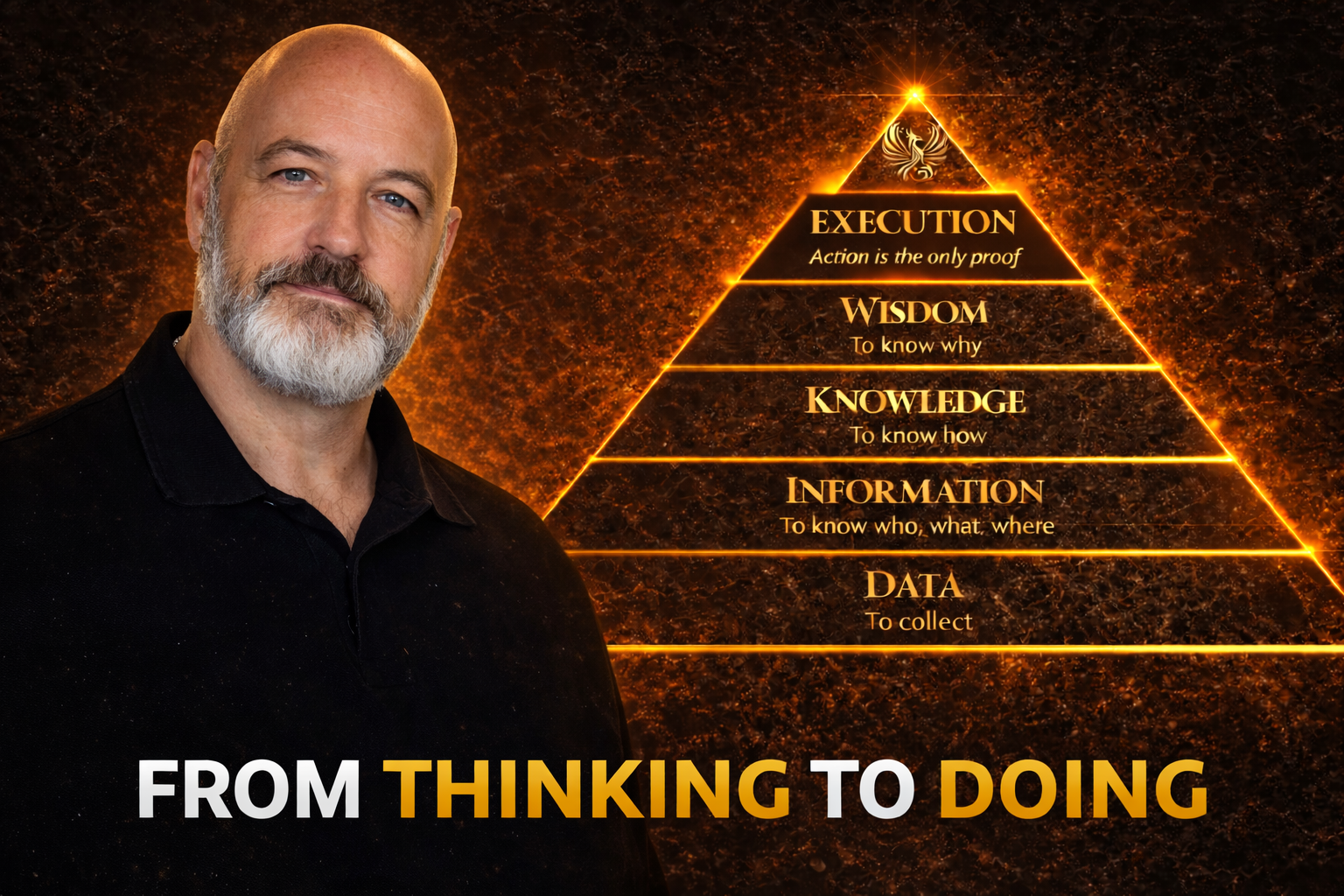
Conducting an execution audit helps pinpoint areas for improvement. It’s a way to ensure your actions align with your goals.
Identifying Your Single Constraint
Every business has a constraint—a bottleneck that limits growth. Identifying it is crucial. Is it a process, a decision-maker, or a resource?
Focus on what's holding you back. This constraint-led growth approach ensures you tackle the most significant issue first. Fixing it can unlock new levels of progress.
Use tools and frameworks to find this constraint. Data and metrics can spotlight where delays occur. The clearer you are, the easier it is to act.
Establishing a Simple Execution Cadence
Once constraints are clear, establish a cadence—a regular pattern of action and review. This creates a business operating rhythm that fosters continuous movement.
Start with weekly reviews. Assess progress, adjust plans, and set priorities. This cadence reduces drift and maintains focus.
Incorporate feedback from your team. They are often closest to the action and can provide insights you might miss. A simple cadence keeps everyone on track and engaged.
In conclusion, closing the execution gap requires both behavioural shifts and robust systems. Diagnose your constraints, set a regular cadence, and foster a culture of accountability. By doing so, you’ll transform strategy into tangible results.
Read when execution matters


